
Erasmus+ KA1
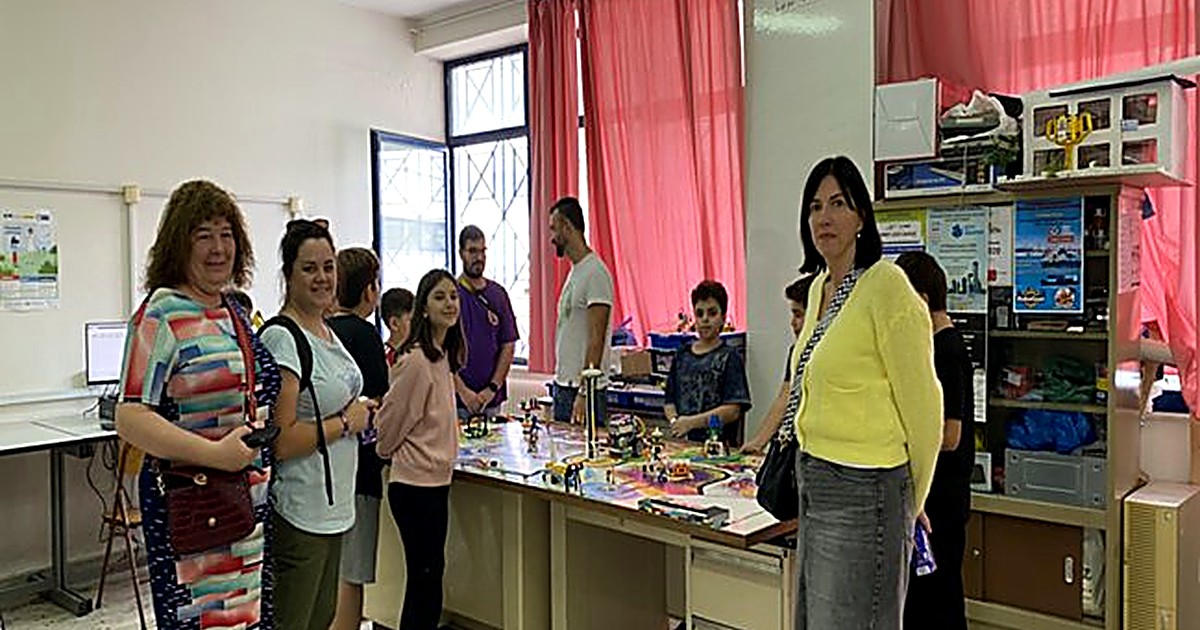
Short description
The course "Robotics and STEAM in Education" is designed for teachers who wish to introduce coding, robotics and STEAM activities into their teaching. No previous experience in coding or robotics is required.
The course starts with simple pre-coding activities that require no special equipment and gradually moves to block coding, educational robots and creative problem-solving activities.
Duration
5 days
Location
Volos and Pelion. Depending on the Association's planning and the course calendar of each period, the course may also take place in other regions of Greece.
Certificate and mobility documentation
Participants receive a Certificate of Attendance from European Pathfinders upon completion of the course. Where applicable, Europass Mobility documentation may be supported in cooperation with the sending organisation and according to the requirements of the mobility.
Who this course is for
This course is suitable for preschool, primary and secondary school teachers, adult educators, special needs teachers, teaching assistants, school managers, vocational education professionals, student teachers and educators who wish to strengthen the use of STEAM approaches in their teaching.
Course aim
The aim of the course is to give teachers the knowledge, confidence and practical tools they need to design coding, robotics and STEAM activities for the classroom. The course helps participants connect technology with creativity, collaboration, problem solving and active student participation.
Course content
Participants begin with simple pre-coding activities and gradually move on to block coding environments and educational robots. The course includes activities with Bee-Bot, Scratch Junior, Scratch, Tinkercad and other introductory tools that can be used across different educational levels.
The focus is on practical, enjoyable and adaptable activities that can be adjusted to the age, level and needs of students.
Main learning modules
- Introduction to coding and robotics in education
- Core programming concepts through simple activities
- Pre-coding activities without special equipment
- Educational robots and Bee-Bot activities
- Introduction to Scratch Junior
- Moving from Scratch Junior to Scratch
- Introduction to Tinkercad
- STEAM problem-solving activities
- Designing a short classroom learning scenario
Methodology
The course is based on practical workshops, group activities, hands-on learning, testing of tools and the design of learning scenarios. Participants do not simply attend presentations; they experience the activities themselves and explore how these can be adapted to their own classrooms.
Indicative programme of activities
Day 1 Welcome, presentation of the course programme and introduction to coding and robotics in education. Discussion of core concepts, pedagogical opportunities and the approach followed during the course.
Day 2 Pre-coding activities for the classroom. Physical and group activities that help students understand sequences, instructions, patterns and problem-solving.
Day 3 Introduction to Bee-Bot, Scratch Junior and Tinkercad. Practical work with simple activities and design of short learning scenarios.
Day 4 Moving from Scratch Junior to Scratch. Creating block coding activities and connecting them with STEAM themes.
Day 5 Design, presentation and feedback on participants' learning scenarios. Discussion on implementation in schools and course closing.
Learning outcomes
By the end of the course, participants will be able to:
- understand basic concepts of coding and robotics,
- design pre-coding classroom activities,
- use simple block coding tools,
- use educational robots in learning activities,
- connect robotics with STEAM approaches,
- create short learning scenarios based on active student participation,
- adapt activities to different ages and learning levels.
The course includes
- Morning refreshments
- Course material
- Certificate of Attendance
- Hands-on work with digital tools and educational robots, where available
- Cultural and educational activities in the course area
- Dinner at a local Greek taverna, according to the course programme of the period
- Visit or introduction to Greek educational settings, where feasible
Course dates
Upcoming dates
- 19–23 October 2026, Volos – Pelion
- 21–25 June 2027, Volos, Greece